
As we approach the end of her 10th grade year, it is becoming more clear that she is adverse to math and science. Can she do well in those subjects? Yes! Does she want to? Nope. That is ok. Her passions are in history, language and art, but I still insist on covering the science and the math.
Chemistry
As written in my Plan post, we deviated from the plan after a month or so of Chemistry. Both the CK-12 Chemistry and Modern Chemistry books cover about the same material, and both are strong in the mathematics of Chemistry (I still don’t remember that much math from when I took it in high school or college!). We ended up going back and forth between the books throughout the year, depending on what I felt was the best presentation of information. Most of the content was from Modern Chemistry, though, since we just preferred the physical book in hand.
I felt that the amount of time spent on the math detracted from the overall learning of concepts. If I was a Chemistry teacher, I am sure I would be able to balance that better, but going through the content together, we ended up spending a lot more time on the math. The ideas of Chemistry were lost.
To make up for this, I decided not to do the final 4-5 chapters of the Modern Chemistry book (the ones that survey different areas of chemistry, e.g., Nuclear or Organic Chemistry). Instead we dug out the copy of Joy of Chemistry by Cathy Cobb. This book has ZERO math and ALL concepts; as a bonus, each chapter starts with a demonstration that introduces the concept. Each day we read through a chapter together, did the demonstration, and then she wrote a one page written “narration” on the concepts learned. I hope this helped.
For her final exam, I am sticking to the big picture chemistry questions, focusing on short answer questions where possible. For someone that enjoys writing, short answer questions in chemistry are more palpable. (Multiple choice tests are not her strong point). I am going back to the beginning and asking the big questions: how is the periodic table arranged and what do all the numbers really mean? what is the difference between an acid and a base, and what do they have to do with OH-, H3O, pH and pOH? what does the ideal gas law tell us between the relationships of its variables?
Yes, there is some math on the final exam — have to be able to show oxidation numbers and how to calculate the limiting agent in a reaction, but that isn’t the focus. I want to make sure the concepts that she does end up remembering are those that have some real-world application to a non-scientist.
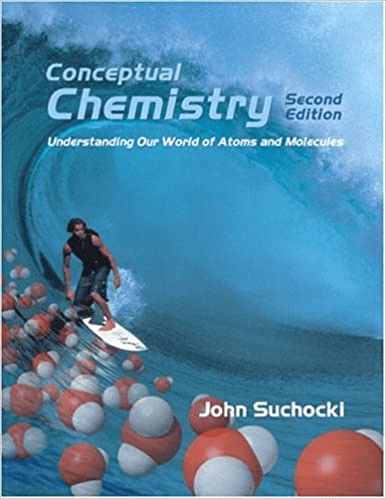
In retrospect, I wish I had found Conceptual Chemistry by John A Suchocki. When researching books for Physics for 11th grade, I had found Conceptual Physics, and saw that it had good reviews/recommendations as being more about the concepts than the math; ideal for non-STEM students. It was then that I noticed there were other books in the series, including the Pearson Education Conceptual Chemistry. If you have students that are self-proclaimed non-scientists, it might be worth a look. I cannot recommend it personally, but I probably would have tried it had I known.
Grading: Most of her grades were the chapter test, as well as the final exam. A few lab grades factored in.
Algebra 2
I really like the Holt McDougal Larson Algebra 2 book that we used. I felt the explanations were clear, the extra sections(which we sometimes used, but sometimes not) helpful, and the problems accessible and applicable to real life. Having the teachers’ edition was extremely helpful, but I continued to work out all of the same problems she did — she would check her work off of my solutions. (Yes, I believe there is a solutions manual, as well as some online sources with worked out solutions for those homeschool parents with far less time on their hands. But who doesn’t love working on Algebra 2 problems! 😉 )
Grading: Chapter tests and the final exam. BUT…
I did throw in a final project of “math creativity”. I used a Pre-Calculus Creativity Project guide that I found online from multiple sources. Who says math can’t appeal to the self-proclaimed non-math minded!
 Top of Her Class of One
One thought on “The Reality: Chemistry and Algebra 2”