Yes, it is January. Yes, we started 10th grade in August. Yes, I am just not getting around to writing this post. Better late than never?
I’ve chosen to combine into one post the “plan” for 10th grade math and science. Both are fairly typical “textbook-based” subjects, so we will tackle them together.
Chemistry
Well, I can tell you that our “plan” deviated less than a month into Chemistry. Last year we started with a “typical” high school Biology textbook, but then decided that CK-12 Biology was a better fit due to the multi-media nature. So this year we started with CK-12 Chemistry (regular version, not Flexbook version 2). We originally chose to use CK-12 because of the wealth of embedded videos and activities related to the content; we chose to use the v1.0 book for two reasons:
- The original online text has the content grouped into pages that easily fit one lesson “day”. The Flexbook v2.0 breaks each chapter into subtopics, so you would cover multiple in a day. For me to batch these up into lesson days was more difficult, versus just knowing “do the next section” today.
- The original online text has separate “books” with worksheets, tests/quizzes and teacher guides; most of those could be downloaded as PDF and easily printed. The v2.0 has online quizzes and tests, which by default are adaptive. Last year we found the adaptive piece didn’t work well for us, so I was creating my own custom tests from the online back of questions and printing.
Well, after a month we realized that those preferences really didn’t matter. The embedded content wasn’t as engaging as in Biology, and reading the lessons online was tougher for this more math intensive/problem based subject matter. We decided to use a “real” textbook. (I personally always prefer “real” books over online reading — while I have read some books on Kindle, I always prefer the ease of use of a “real” book. Creature of habit!)
We already had a copy of Holt, Rinehart, and Winston Modern Chemistry c2009. It was much easier to follow along with the math (I like following with my finger, which you cannot do on a tablet), and it provided many section and chapter review questions right in the book. I did not purchase a teachers’ edition (though I would like to have one if they were a reasonable price used!).
Chemistry is not my student’s favorite subject. Not even close. Like, near the bottom of the list of all possible classes. But so far we are getting through it.
For Lab work we are using the Home Scientist’s Standard Chemistry Lab manual. The PDF is free to all, but refers to chemicals and tools obtained in their Chemistry set. The labs will be focused more on the second half of the year when we get into the “meat” of Chemistry topics.
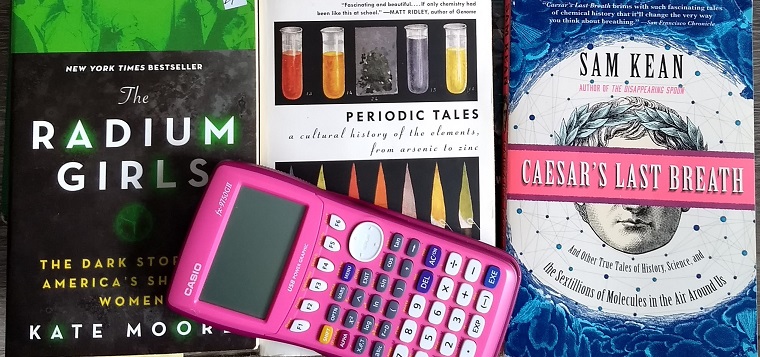
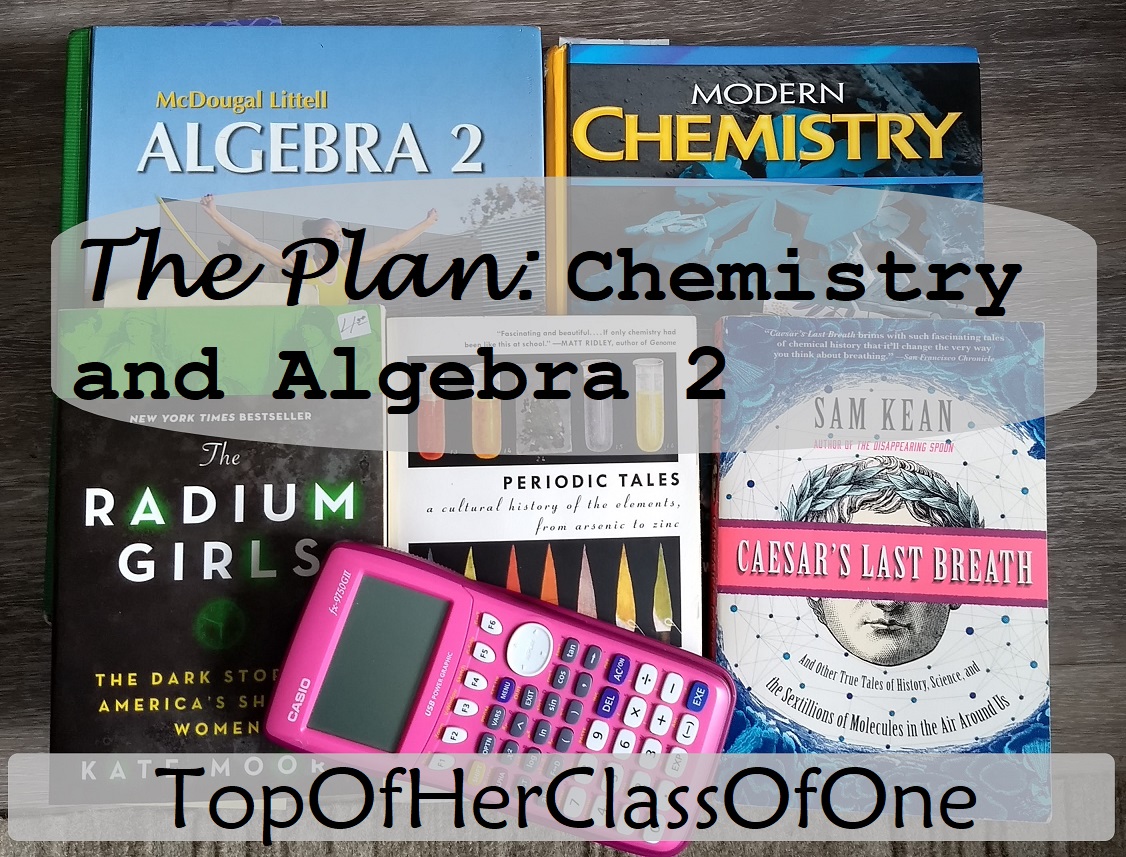
We chose to use Build your Library (BYL) Year 11 for this year, which does include a Chemistry component. The schedules use the CK-12 Chemistry v1 book (which is another reason we started down that road), so we had to just switch out for comparative chapters in the Holt textbook. The supplemental books, though, in BYL are what we really are looking forward to. Periodic Tales, Caesar’s Last Breath, and Radium Girls are the three main books we plan to read (we already read Napoleon’s Buttons). These are the “real” books that make the connections to what seems like a tough subject (chemistry), and these are the ones that make Chemistry bearable for my student.
Algebra 2
Math is math, at least to my student. As I mentioned before, I majored in math, and I love the problem-solving aspects and the beauty of math. Her, not so much.
There isn’t much to say about Algebra 2. I did spend quite a bit of time trying to decide which traditional Algebra 2 textbook to use. (I wanted to teach her, so I felt a standard text would work better than one designed for homeschoolers.) It came down to two final options:
Larson texts are highly acclaimed, but I wasn’t sure if that one would be too advanced. The Holt text was very graphing-calculator and exploration-based, where Larson was slightly more in depth with “here is how it works” and “here is why”. I talked to a friend that teaches high school Algebra 2, and she understood my thoughts and concerns exactly — she has taught from both books. In the end, I chose the Larson text. It is the text I would want to learn from, though my student is totally different from me, so that isn’t necessarily a valid reason! 🙂 I wasn’t a fan of relying so much on technology in the Holt text; the Larson text still has a fair amount of graphing calculator use, but only after knowing how to do it manually. So far, I think Larson has been the good choice.
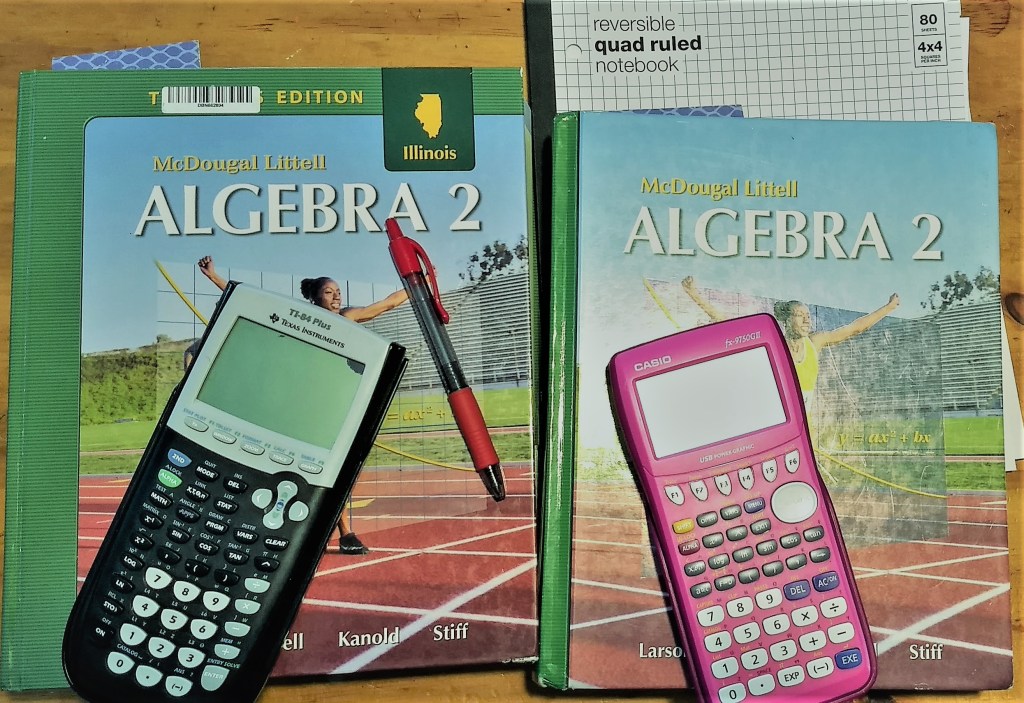
We have no supplemental books with the Algebra 2 text. Each day we go through the lesson together, and then we (separately) work out the assigned problems. I did give in and purchase a teachers’ edition, which has been very helpful in checking answers.
Conclusion and Hopes
Hopefully these resources help this year. I really want my student to love math and science. I know I should probably rely less on textbooks to cultivate this love, but at the same time I now understand how schools/teachers “teach to the test”. I want her to succeed in tests and college, so I want to make sure she gets full exposure to the content. It is a balance, I suppose. Being EXPOSED to content with some basic textbooks, while taking time to EXPERIENCE the content with living books and activities.
 Top of Her Class of One