
I had high expectations for Biology this year, knowing Sunshinegirl loved all things nature. The “rest” of Biology (microbiology, for example) could have gone either way — and different parts went different ways.
The Textbook
We started the year using the CK-12 Chemistry 1.0 book, but we quickly found that she had a rough time reading the chapters on a screen. She wasn’t retaining the information on her own, so we switched to using the Miller-Levine Biology book. The book is full of information and real-life applications, so it was a great Biology spine. We would read through the chapters together and discuss everything; Sunshinegirl preferred interactive Biology, not individual work.
What we were lacking were resources to go along with it — tests, quizzes, and worksheets. I was trying piece them together, but it was getting to be a bit much. Purchasing the teachers’ guide and/or worksheets just wasn’t turning out to be an option (either very expensive or too “used”…long story).
About halfway through the school year we switched back to CK-12 Biology, but this time we used the Biology Flexbook 2.0 option. The 2.0 option includes embedded videos and extra resources (readings, Interactives, videos) to supplement the material — a true multi-media learning experience. I took the time to do the Teacher “certification” course for Flexbook 2.0, and that really made me realize this would be a good option for us. As a “teacher”, I could take the base Flexbook (textbook) and customize it! I could rearrange (or add!) chapters, add content pages, update existing pages, modify the daily quizzes, and assign work. When we were in the infectious disease chapter, I could easily add a paragraph about COVID and some embedded YouTube videos about it. If I wanted to go into more detail about taxonomy, I could add those details very easily.
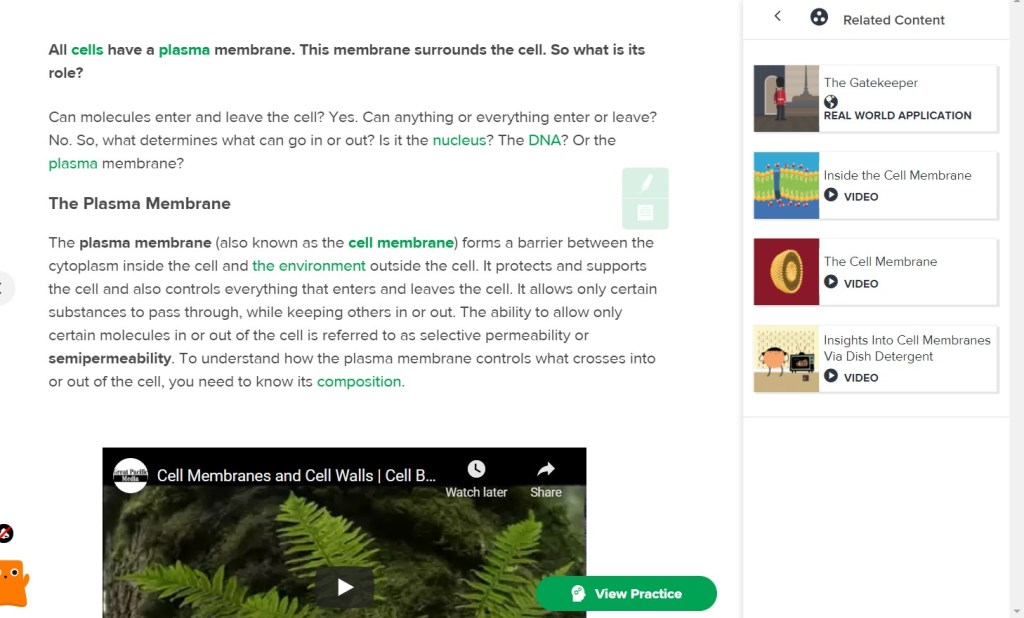
Built into the Flexbooks are daily “Practices” (online quizzes) that cover that particular section. The Practices are adaptive, meaning as students get questions right (or wrong), it adjusts. The issue we found is that the question bank covers more than what was in the reading; the questions are on a “topic”, but different textbooks go into more/less detail. She was getting questions that did not apply to the section she read. In addition, she was having issues with the “fill-in-the-blank” questions; they were very picky on spelling, capitalization, and hyphenation. So instead of using the out-of-box Practices, I started building my own from the CK-12 question bank. I could easily replace the standard Practices with my custom quizzes.
After a while, associating a quiz per section (we would cover 3-5 sections a day) was getting tedious, though, so I went to building quizzes that I could print. I would build a quiz that covered multiple sections all in one. Once those are built, you can request either a PDF or HTML version of them, either with or without the answer key. This became the standard for the rest of the year. It was still a few hours of work on my part each week to create and print those quizzes, but the resources were all there — I just had to pull them together.
Note: We looked at using the CK-12 Biology 1.0 worksheets and quizzes since they were “close” to the 2.0 book. The v1.0 is more of a typical book and has associated PDFs with worksheets, tests and quizzes for the instructor to simply print. There is no online quiz option, only the worksheets.
The Living Books
The living books that she read this year were mostly well received. I read through as many as I could, and I enjoyed the reads myself.
Lives of a Cell: Notes of a Biology Watcher by Lewis Thomas
I Contain Multitudes by Ed Yong
The Violinist’s Thumb by Sam Kean
The Sixth Extinction: An Unnatural History by Elizabeth Kolbert
The Microbe Hunters by Paul De Kruif
The Genius of Birds by Jennifer Ackerman
In the Shadow of Man by Jane Goodall *
What a Plant Knows by Daniel Chamovitz
Soul of an Octopus by Sy Montgomery *
* The two starred books were biology-related books that I let her choose on her own. She LOVED them both and keeps them in her own book collection (instead of in the homeschool section). She was inspired by both books. Here is a portion of her book review:
“…The chimps have complex hierarchies and as many feelings as we do. They use tools in everyday life, and sometimes they even innovate with human objects. Goodall named each and every chimp, and walked with them, groomed them, and even cared for them sometimes. Her work inspired many more to come.
Including me! I love this book so much! I’m keeping it on my shelf and reading it again. It mirrored the number one thing on my list of greatest wishes: to someday be adopted by wild animals. I want to be trusted by animals and adopted somehow and this book helped me to believe I can do it!”
The Labs
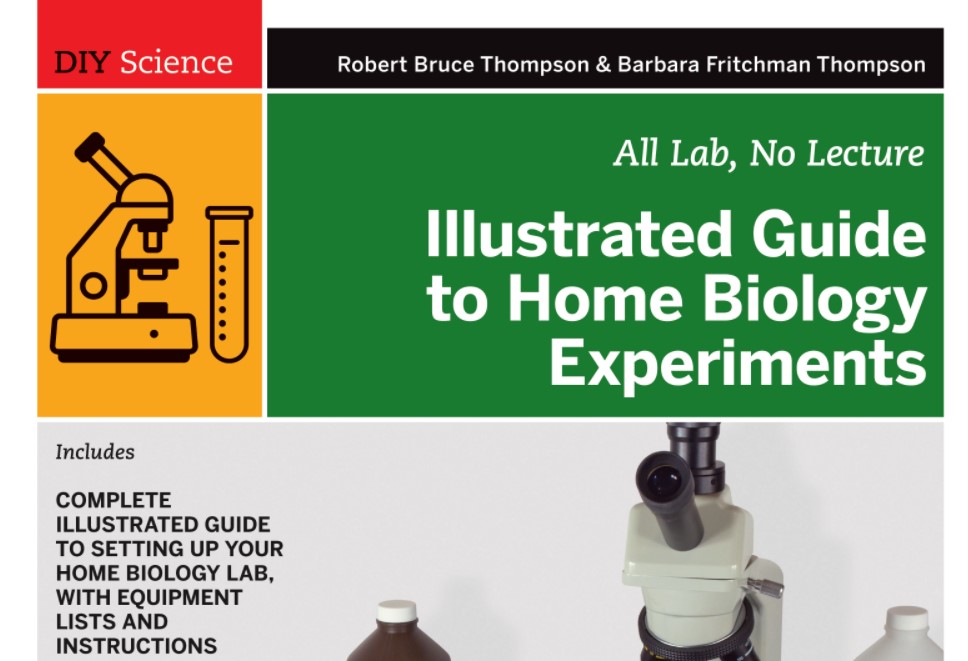
For the most part, we used the Illustrated Guide to Home Biology from the Home Scientist. The labs were very detailed, but we were not always getting the results we wanted. We had most of the kit already (from another kit), but did have to purchase a few things to complete it. What we didn’t purchase were a lot of the “pre-prepared slides” and such, and those were used a bit more than I had realized (used once, but many labs had a “pre-prepared” component).
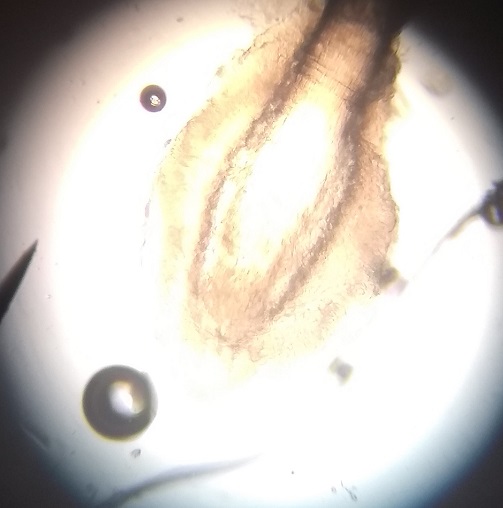
The labs were helpful, but I think it was the lack of importance we placed on them that made them fizzle. I scheduled labs for Friday afternoon, which in hindsight probably wasn’t the best time. That being said, the book and kit were invaluable. I may not have gotten Sunshinegirl to ever write up a good lab report, but she did explore and have fun drawing what she saw in the microscope.
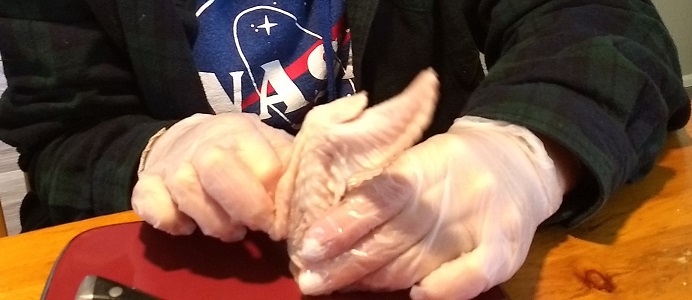
One last note on Biology labs: we chose not to do the “standard” dissection. The idea of cutting open a fetal pig or frog just wasn’t what my nature lover wanted to do. BUT, I did find resources online for using grocery-store chickens. I put that whole chicken in front of her, and she explored the bones, the ligaments, the tendons, and tried to make sense of the mostly-missing giblets. The chicken wing dissection was most interesting (finding the ligaments that make the wing move!), so I recommend you Google “chicken wing dissection” and review your options.
Final Notes
This year was a challenging year overall for Sunshinegirl. Getting used to “high school level” courses and what was expected of her was the biggest obstacle. Biology didn’t turn out as I hoped. Instead of wonderfully neat lab reports and well-organized class notes, it ended up as an exploration of all things Biology. In my opinion, allowing for exploration is key to keeping interest in the sciences. The lab reports and notes will come later as far as I am concerned.
Biology was a success.
 Top of Her Class of One