Back before kindergarten when I was researching methods of homeschooling, I quickly learned about the Charlotte Mason method. Charlotte Mason lived 100 years ago and had the belief that children were whole persons and not just a mind to fill. She wrote a whole series of books that are used heavily by homeschoolers today, particularly the Home Education volume. I will be honest and say that while I have read parts of them, I never read through them all. I did use some more recently written books on the subject and read heavily through forums and how-to’s on various sites, including Ambleside Online.
What we like and “did” the Charlotte Mason way:
- Read real, “living” books instead of text books (books written by subject matter experts, not textbook writers)
- Read classic literature from a young age (kids can understand good writing long before they can read it themselves)
- Kept lessons relatively short to match the attention span of the child
- Used “narration” as the “assignments” for each reading
- Incorporated nature study, and famous art work, poems and musical pieces into weekly lessons
What did this look like?
From a young age kids are able to comprehend classic works of literature even if they cannot read the words themselves. Even upper elementary and middle school students that would normally have trouble reading a volume of text themselves could easily understand the text when read to them outloud, either by a parent or from a recording (e.g., librivox.org).
We started kindergarten (“Year 0.5” as it was referred to then, “Year 0” now) with a cozy book nook where we would sit and read through the books together. When I finished reading a story or a history, SunshineGirl would tell me in her own words what I just read to her, a concept called narration. Narration requires excellent listening skills and allows the child to process the reading/telling in her own mind and choose the important parts. Narration is a precursor to good writing; it teaches the child how to choose the important topics and organize information. In the earlier years, all of the narrations are done orally, but starting late elementary/middle school age, some of the narrations are put to paper. Even at the high school level some narrations are still told out loud.
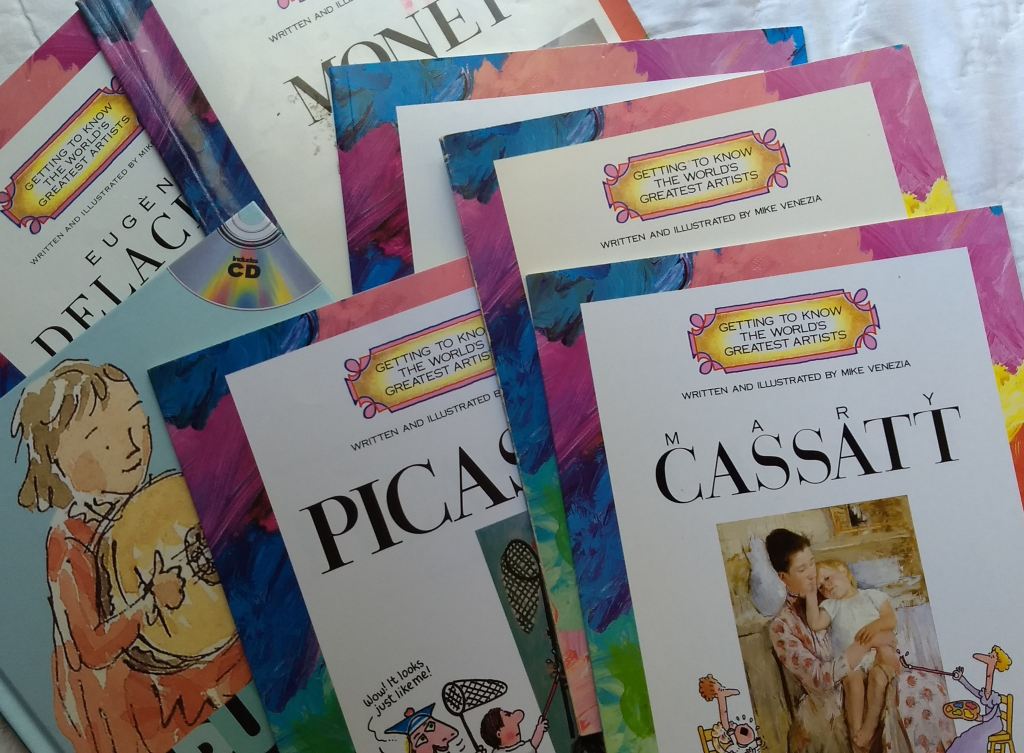
We did picture study weekly by spending a few minutes looking at a photo of a famous work of art. We’d remove the photo and then tell each other all of the details that we could remember in our head. We’d often post the photo on the refrigerator for the week to remind ourselves of what we saw. Often we spent some time on learning about the artist himself using the web, or books such the series of books by Mike Venezia.
Music study and poetry were similar to art study, except we would listen to one piece a week (YouTube is a great resource, as are CDs from thrift stores!) or read one poem a week. Art, music and poetry usually involved the same artist for six weeks, providing some continuity.
Other components of the Charlotte Mason way included nature study and short lessons. In the early years we had nature journals and would venture out to draw “nature” that we found. We would research what we found after returning to the house. Short lessons allowed Sunshinegirl to focus on a lesson in her attention span instead of fighting with the boredom that set it. Books were spread over twelve week terms, so one small part was read in a given week, allowing time to digest the content for a week before reading the next passage.
I’m not doing Charlotte Mason justice in my description of what we did, so if you are interested, please look at all of her principles.
So what is this AmblesideOnline that I keep mentioning
AmblesideOnline (AO) is a non-profit website that provides information, book lists and schedules for homeschooling K-12 (Year 0 – Year 12) * using Charlotte Mason’s principles and even book suggestions. Each year has a list of books, many of which are public domain (free) and weekly schedules on when to read each. The schedules include almost all subjects, including history, literature, science, geography, artist/music study, and suggestions for math and foreign language.
We had to choose our own math curriculum and foreign language resources, and we chose to supplement with science and spelling/grammar/writing curricula as needed.
AmblesideOnline was a wonderful (and did I mention, free!) resource that made homeschooling the early years easy. The volunteer homeschool mom moderators that maintain the information have spent years vetting the books and putting together useful schedules. I would print the schedule (two pages a trimester “Term”) and click the links to either the public domain book or the link to purchase (found right in the curriculum lists), and then off we’d go for the Term.
* NOTE: Year X does NOT necessarily correspond to Xth grade. If you start with AO in kindergarten, it is feasible your child will finish twelfth grade in Year 12, but AO is more challenging and rigorous than many curricula, so for those that switch in between or need extra time, I don’t think it is abnormal for a child to graduate after Year 10. Some children need extra time, and they even have years 3.5 and pre-7 available for those that need a catch-up year.
So what’s next
I will save my thoughts for other posts, but I can say we are deviating from AO for high school. We have loved using it through eighth grade, but we find we need to make a change to support Sunshinegirl’s learning style. AO through high school I have no doubt would create a very intelligent, worldly-wise and well-read adult that would succeed in any university. I would highly recommend others to look into it and determine if it is a good fit. For us, we have decided to go a little more custom for high school.
 Top of Her Class of One