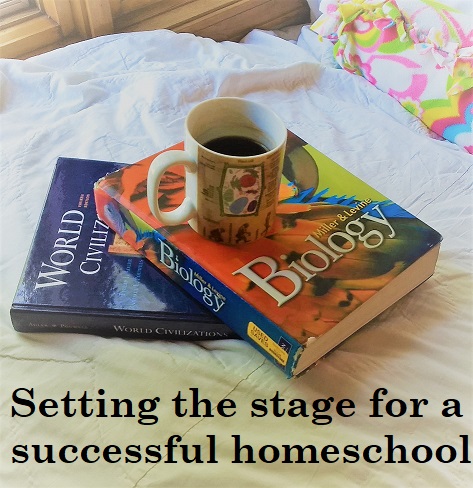
AKA, How to get your my student on board!
I’ve had the luxury of homeschooling one child from day one of her school career, thus I’m no expert in what the majority of families are facing. Most families either have A) multiple children (a built in classroom full of some socialization) or B) are not starting homeschooling from the beginning.
For families that are starting homeschooling after the student has already been in public schools, I am sure that can be tough. In some cases, the student asked to be homeschooled or was part of the decision, so hopefully in those cases there isn’t as large of an adaptation period that will occur. For those students that are starting the learning-at-home process not based on their own free will (parents/educators decided it was best or pandemics that force kids to be at home), I can only imagine the struggle.
These are the things we’ve learned to provide some of the “school” experience at home!
Leading up to first day of school
In “real” school years, kids have the routine of going “back to school” shopping and attending open house/orientations. Why can’t homeschool students have those experiences, too?
Back to school shopping — who doesn’t like fresh school supplies and a great first day of school outfit. I always tried to take each of my kids out separately for this yearly tradition. Include coffee or lunch, and let them work off a school supply list that you have put together based on your homeschool needs.
A back-to-school outfit for the first day of school? You bet! Does it have to be fancy? Ha! Our tradition is to get new pajamas or pajama pants to wear the first day – why not!? We homeschool, therefore we can! Since day one we’ve known being able to “school in your pajamas” was unique to homeschooling, so why not make it a fun tradition.
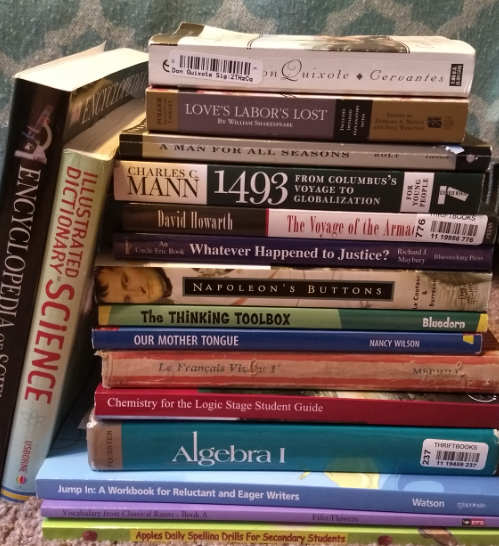
Orientation? You can do that, too! While by the late middle school age I included Sunshinegirl in some of the curriculum decisions, she never really saw the big picture until orientation. I slowly procure all of the books over the summer, and while I don’t hide them from her, I just stash them in the pile. On Orientation Day I have the overall schedule and a big pile of books! Who doesn’t love a BIG PILE OF BOOKS! (Ok, maybe I’m weird, but I LOVE a pile of books!) We walk through the books as a family (Mom-Teacher, Dad-Principal, and Sunshinegirl-Student) — it is a big deal!
First day of school
In public school kids wake up, put on their new outfit, eat a good breakfast, and head to school with the new backpack and a filled lunchbox — after the requisite first-day-of-school pics (that mom will inevitably post on Facebook 3 minutes after the kids are gone). You can do the same with homeschool!
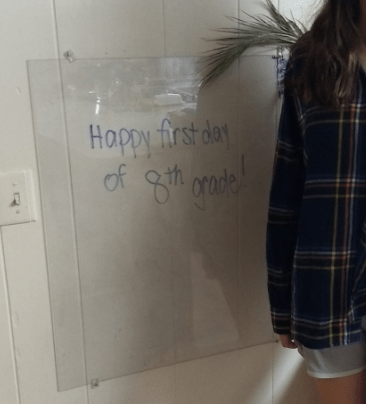
Take those pics! Get a pic of the students in their pajamas with the new backpack on. Write on your big whiteboard (you have one, right?) “Welcome to Xth grade” and get the pic next to it. Take the photos outside in the sunlight (because it will be light outside since your homeschooler doesn’t have to leave the house at 6:45am in the dark to catch the bus to school!).
Lunchbox? Of course! Since kindergarten I have “packed” a special first day of school lunch for Sunshinegirl — with special lunchbox treats that I don’t normally have around the house. She doesn’t eat it at the kitchen table, but at her desk “like the other kids would” (though I know that 99% of schools eat in a cafeteria, but shhh). Tradition. 🙂
A place of learning
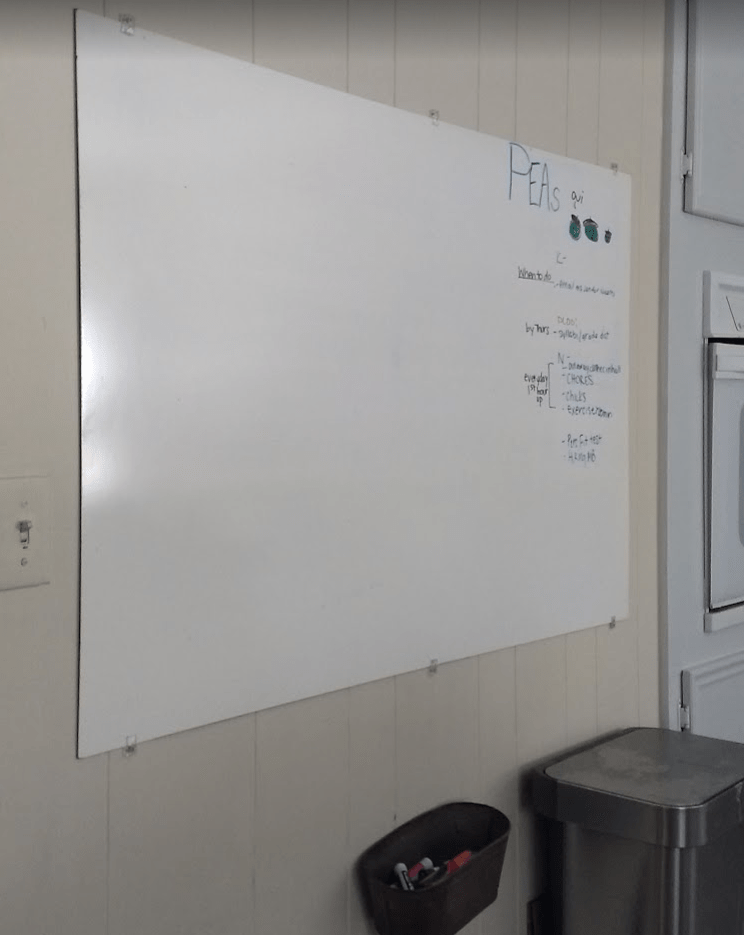
Ok, I mentioned the “whiteboard” above. For the past few years we have had a 3×4 plexiglass (clear — read: “blends in with the wall when erased”) whiteboard in our kitchen for working out math problems or conjugating French verbs, but this past year we realized it just wasn’t big enough. Yes, it is my kitchen; no, it isn’t the most aesthetic thing, but we opted for the larger 4×6 board, and it makes all the difference. I would say we use it mostly for math problem instruction, but we have used it for other subjects just for a change of pace. Tired of drawing molecules or conjugations on paper? It is so much more fun to do it on the whiteboard with a variety of colored markers! You can write a quote of the week at the top, or write an extra “to-do” list in the corner. The possibilities are endless!
As far as a regular study space, we’ve moved around the house through the years — I know many homeschool families have a dedicated “homeschool space”, but we’ve gotten away from that. She used to have a desk in our three season room (near our bookshelves), but since we live in Michigan that didn’t work out too well in the winter. But we do have certain spaces that we associate with learning: the kitchen table is for math work, the couch is for reading (both together and independently), and Sunshinegirl’s desk in her room (or even the floor…) is for independent work (with the door open, so I can walk by and make sure learning is happening!).
Why is a regular place important? Students need to be able to enter the “school” mindset. Expecting a new homeschooler to do school work in his bedroom is probably not realistic. A new homeschooler isn’t used to his bedroom being a place of learning, so focus will not be at its highest. A new desk in his room, or a designated spot somewhere else in the house is probably more appropriate. That way when the student enters that spot at the designed time of day (see “A time for learning”, below), his learning hat goes on, just as it would when he walked into the classroom at home.
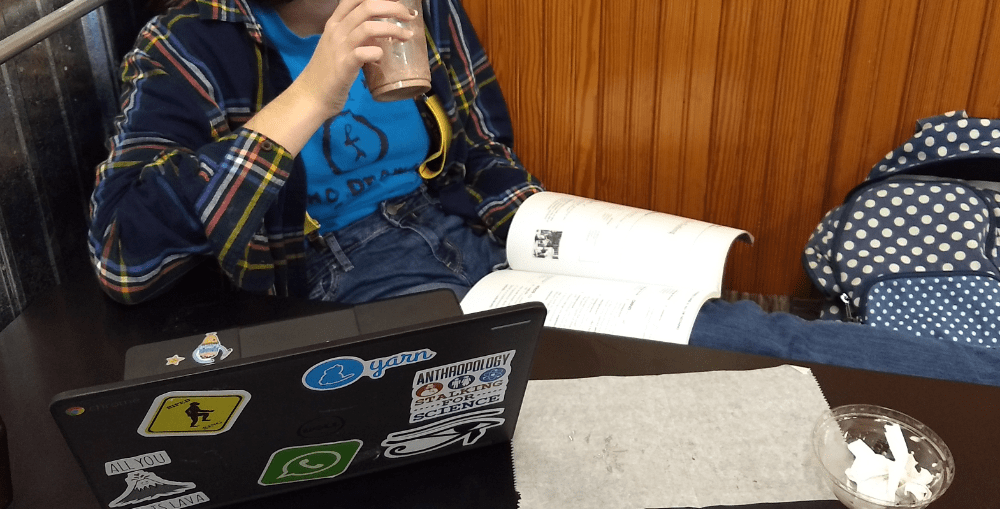
Tip: For a fun change of pace from the “standard place of learning”, I highly recommend homeschooling “elsewhere”. It is a treat to the student to be able to spend a morning at the local coffee shop or the library doing schoolwork. Learning a foreign language (that you both know)? Regularly go for coffee and speak only that foreign language. The hour spent at the coffee shop practicing the language is priceless for learning!
A time for learning
ad·verb /ˈadˌvərb/
noun
1. a word or phrase that modifies or qualifies an adjective, verb, or other adverb or a word group, expressing a relation of place, time, circumstance, manner, cause, degree, etc
We’ve talked about “place”, so now it is time to talk about “time” (and hopefully the combination creates a positive “manner”!). Homeschooling provides for a lot of flexibility, especially with “time” — if a student isn’t at his best at 7:30am (when normal high school starts), then start homeschooling at 8:30am. Have a doctor’s appointment mid-day? Just stop schooling and take care of it.
Does that mean homeschooling should just fit in “whenever”? Probably a bad idea. Set a “regular” schedule and try to stick with it. Public schoolers get a schedule of each of the 6-7 classes for each semester, so provide the same for your student. Does that mean math is always from 8-9am? Nope. Some days it may only take 30 minutes, and others 90 minutes. But can you get in the groove and have a suggested order of subjects for the day, and an expected start time? That is what works for us.
So what have we done?
In 8th grade, Sunshinegirl was expected to start “school” at 8:15 (though we did PE for part of the year, which was 7:45-8:15, since we are both “early exercisers”). She would work through her Language Arts, Literature, and History readings while I was working, and then late morning we’d come together for any “together” readings for the day. We’d break for lunch (sometimes with a lunchtime viewing of videos related to school), and after lunch, per her request, we tackled Algebra. Once we got through that (and I say “got through”, but that is another story!), we moved on to French. She would usually have some independent French work to finish after we completed the lesson together, so ultimately she was usually done by 2:30-3pm.
“Wait, I’ve read that homeschool goes much faster than public school. If I did the math right, you did 6+ hours of work minus a break for lunch! That seems long!”
Yes, it probably is. And yes, most homeschool parents will tell you that work can be done in less time. First, I want to note that once she is done at 2:30, she is done. No daily homework. So really the 5 ½ hours of school were dense, productive, flexible and what we needed in our school. And it varied – she took part in the public school’s homeschool program 1-3 days a week for the past few years, so at least one of the school days was shorter than the others to accommodate that. But it worked. We had a weekly schedule that was our guide, and it worked.
The “extras”
Homeschool doesn’t mean sitting at your desk everyday, trudging through the lessons with no variety. We incorporate “extras” that the public schoolers DO, and those things they can’t DO but wished they could!
Spirit week: You know them from high school. A week in the fall and a week in the spring where each day has a “theme” and students dress up to match the theme. “Superhero day”, “School color day”, “twin day”, “Future career day” (funny story – they had this at our high school, and my son says “Mom, I need a Star Trek uniform”. “Why?”, “So I can wear it for Future Career day – I can be a flight engineer for the USS Enterprise” – yes, he was kidding, and yes, I bought him the shirt!). Make up your own days, or follow these Homeschool spirit week ideas.
Or more sarcastically these spirit week ideas from the New Yorker.
Field trips: This is the beauty of homeschooling – more flexibility for field trips! Visit the museum or an art show or a rock show or a local farm. It is all wonderful learning. One thing I learned, though: visiting museums during the week inevidiably leads to running into crowds of public school kids on THEIR field trips. Plan to visit after lunch — many schools do field trips in the morning, eat lunch at their destination, and then head back to school.
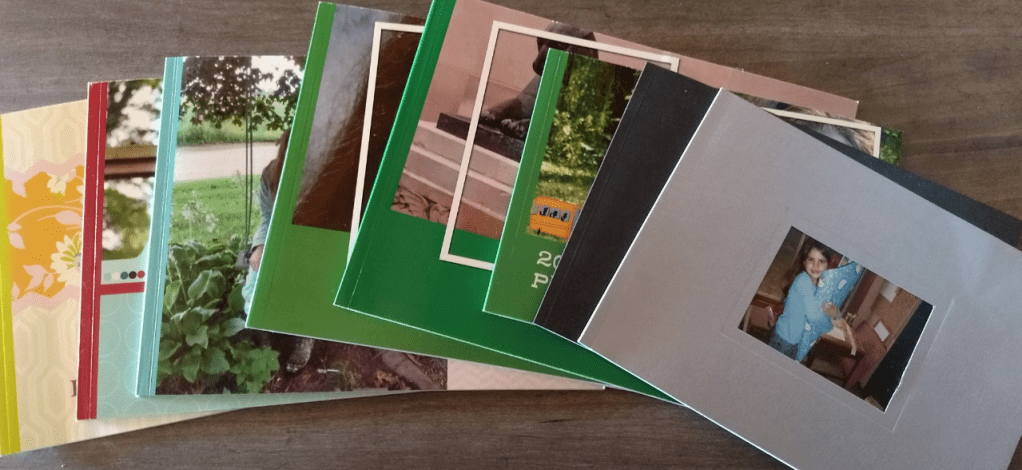
Yearbooks: Yes, I said yearbooks. Take pictures of the learning place, first day of school, science experiments, field trips, extra-curricular activities, and art projects. Use a service like Shutterfly or Walgreens to make a small 5×7 soft covered book ($10?) with all of the photos. We have one for each year sitting on our bookshelf, and Sunshinegirl takes them out occasionally and does the “oh, do you remember when…” thing.
So make it fun, but make it unique. Bring in the fun “public school” aspects, but focus on and create the unique homeschooling traditions as well.
 Top of Her Class of One